ServicesCarpet Tile
Carpet Tile in Conroe
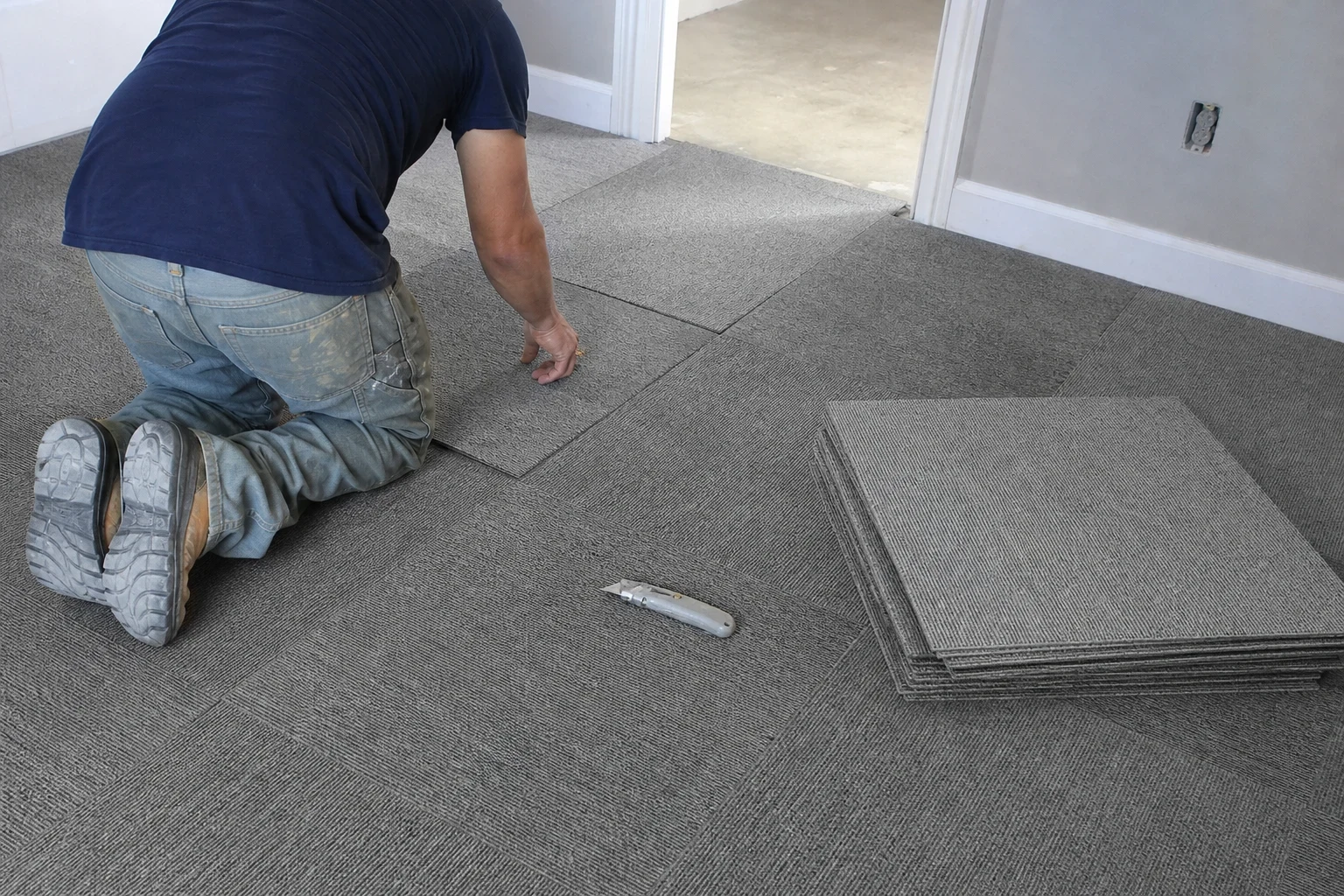
Carpet tile feels like regular carpet underfoot, but it goes down in squares. When one gets stained or worn, you lift it out and set in a spare. We install it in game rooms, kids' rooms and home offices where spills happen and the floor has to keep going.
Carpet in Squares, and Where It Fits
Instead of coming off one wide roll, carpet tile is sold in separate pieces. Most are two-foot squares, and some come as long planks. Each piece has a stiff backing that holds it flat and in place. Nothing gets stretched wall to wall, so there is no tack strip and no seams pulling apart as the years go by.
The math is simple. Carpet tile can cost more per square foot than broadloom carpet up front. But broadloom with one bad stain or a worn path often gets replaced all at once. With tile, you replace the four squares by the door and keep the rest. Over ten or fifteen years, that is where the savings show up.
It is a good fit for rooms that take abuse and change use. It is not the softest option for a primary bedroom. If plush is the goal there, our carpet installation page covers broadloom with a thick pad.
What the Job Includes
Measuring and layout plan
We measure the room and plan where the cut tiles land. Cuts go along walls and under furniture, not in the middle of a walkway.
Subfloor check and prep
Carpet tile shows every bump under it. We scrape, patch low spots and grind high ones so the squares lie flat and the edges don't curl.
Moisture test on slabs
Most homes here sit on concrete slabs, and damp air pushes moisture up through them. We test before we glue, because wet concrete breaks down adhesive and lets tiles lift.
Installation pattern of your choice
Quarter-turn, brick, ashlar or monolithic. Each one hides wear and seams a little differently, and we'll show you how they look before we start.
Spare tiles and cleanup
Extra squares from the same production batch stay with you, so a future patch matches what's on the floor. We haul off scraps and the old flooring, then vacuum the room before we pack up.
Signs Carpet Tile Is the Right Call
- One stain ruined the whole carpet
- A dropped plate of spaghetti or a pet accident left a spot that won't come out. With tile, that is a ten-minute swap next time.
- A worn path from the doorway
- Traffic lanes wear down while the corners still look new. Tiles can be rotated or replaced just in the path.
- The room keeps changing jobs
- Today it's a playroom, in five years an office. Carpet tile handles rolling chairs and toys without crushing flat as fast as plush carpet.
- Seams are splitting on old carpet
- Stretched carpet ripples and opens at the seams as it ages. Tiles have no stretch to lose.
- You want carpet over a slab, with no pad
- Some carpet tiles come with a built-in cushion back. That gives you a softer step without a separate pad soaking up moisture.
How the Day Goes
- 1
Phone call and walk-through
On the phone, we'll ask what the room is for and who spends the most time in it. Then we visit, measure and check what's under the current floor so the quote fits the real job.
- 2
Clear the room and remove the old floor
We move standard furniture out of the way and pull up old carpet, pad and tack strip. Staples and glue get scraped off.
- 3
Prep and test
We patch, level and run the moisture test. If the slab needs a sealer first, we tell you before we go further.
- 4
Lay the tiles and walk it with you
We start from the center line and work out to the walls. Then we walk the room with you, point out the spares and show you how to lift a tile.
What Moves the Price
Carpet tile pricing comes down to the product and the floor it goes on. A cheap tile on a rough slab will fail early and cost more in the end. We'll walk you through where spending more pays you back and where it doesn't.
- Tile grade and backing
- Face weight, fiber and backing type all matter. Cushion-back tiles cost more but feel softer and last longer in busy rooms.
- Condition of the subfloor
- A flat, dry slab needs little work. Cracks, old glue or moisture add prep time and materials.
- Removal of the old floor
- Pulling carpet and pad is quick. Glued-down vinyl or tile underneath takes longer.
- Room size and shape
- Square footage sets how much tile you buy. Closets, odd angles and several doorways add cuts, and each cut leaves an offcut that usually can't go anywhere else.
Carpet Tile Questions
- How do I replace a damaged tile?
- Lift the edge of the bad tile with a putty knife and pull it up. Set a spare in the same direction as the ones around it and press it down. Most release adhesives stay tacky for years, so you usually don't need new glue.
- Will the seams show?
- Up close, you can see them on some products. Patterns like quarter-turn or ashlar break up the lines so the eye doesn't catch them. We'll lay a few samples down so you can judge in your own light.
- How many spare tiles should I keep?
- We usually leave about 5 percent of the room. Dye lots shift from batch to batch, so tiles bought later may not match. Keep the box somewhere dry and flat.
- Is carpet tile a good idea in a kid's room or game room?
- Yes, that's where it earns its keep. Juice, slime and paint happen. If a spot won't clean, you swap it, and the room still looks even.
- How does it compare to luxury vinyl tile?
- Luxury vinyl tile shrugs off water and wipes clean, but it is hard and louder underfoot. Carpet tile is warmer and quieter, especially upstairs. Some families use vinyl in the kitchen and carpet tile in the bonus room.
- Do you install carpet tile outside Conroe?
- Yes. We work across the area, including Willis, Montgomery, Magnolia and The Woodlands. The process and the prep are the same wherever the job is.
Get Carpet That Can Be Fixed a Square at a Time
Tell us about the room, who uses it and what's under the floor now. We'll come measure, check the slab and give you an honest take on whether carpet tile is the right buy.