ServicesHardwood Flooring
Hardwood Flooring in Conroe
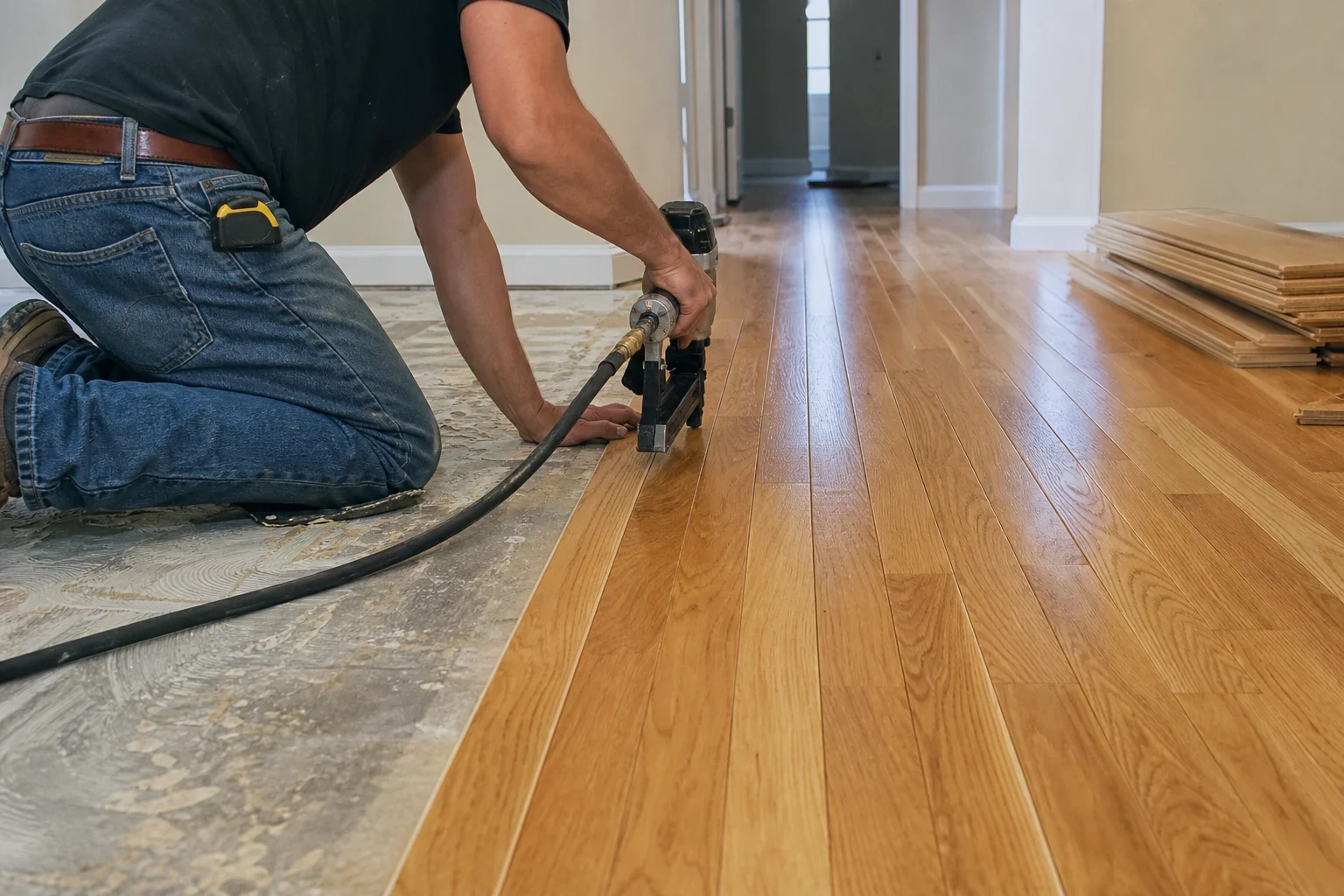
Hardwood costs more on day one than most floors. It can also outlast most of them if the right type goes down the right way. We help you pick between solid and engineered wood, check your subfloor, and install it so it holds up.
When Hardwood Is the Right Call
Hardwood makes sense when you plan to stay in your home a long time and want a floor that ages well. A good oak or hickory floor wears in, not out. Scratches blend in over the years instead of showing through a printed layer.
It is not the right pick for every room. Bathrooms, laundry rooms and spots near an exterior door that takes rain are hard on wood. For those, we will tell you plainly that tile flooring or luxury vinyl plank will serve you better and cost less over time.
Most houses around Conroe sit on a concrete slab, and that shapes the choice. Engineered hardwood handles a slab well and moves less when indoor humidity swings. Solid hardwood is a strong fit over a plywood subfloor, like a second story. We walk you through both before you spend a dollar.
What the Work Includes
Moisture testing
We test the slab or subfloor before anything is ordered. Wood laid over a damp slab cups and gaps. Knowing the numbers up front tells us what barrier or glue system the job needs.
Old floor removal
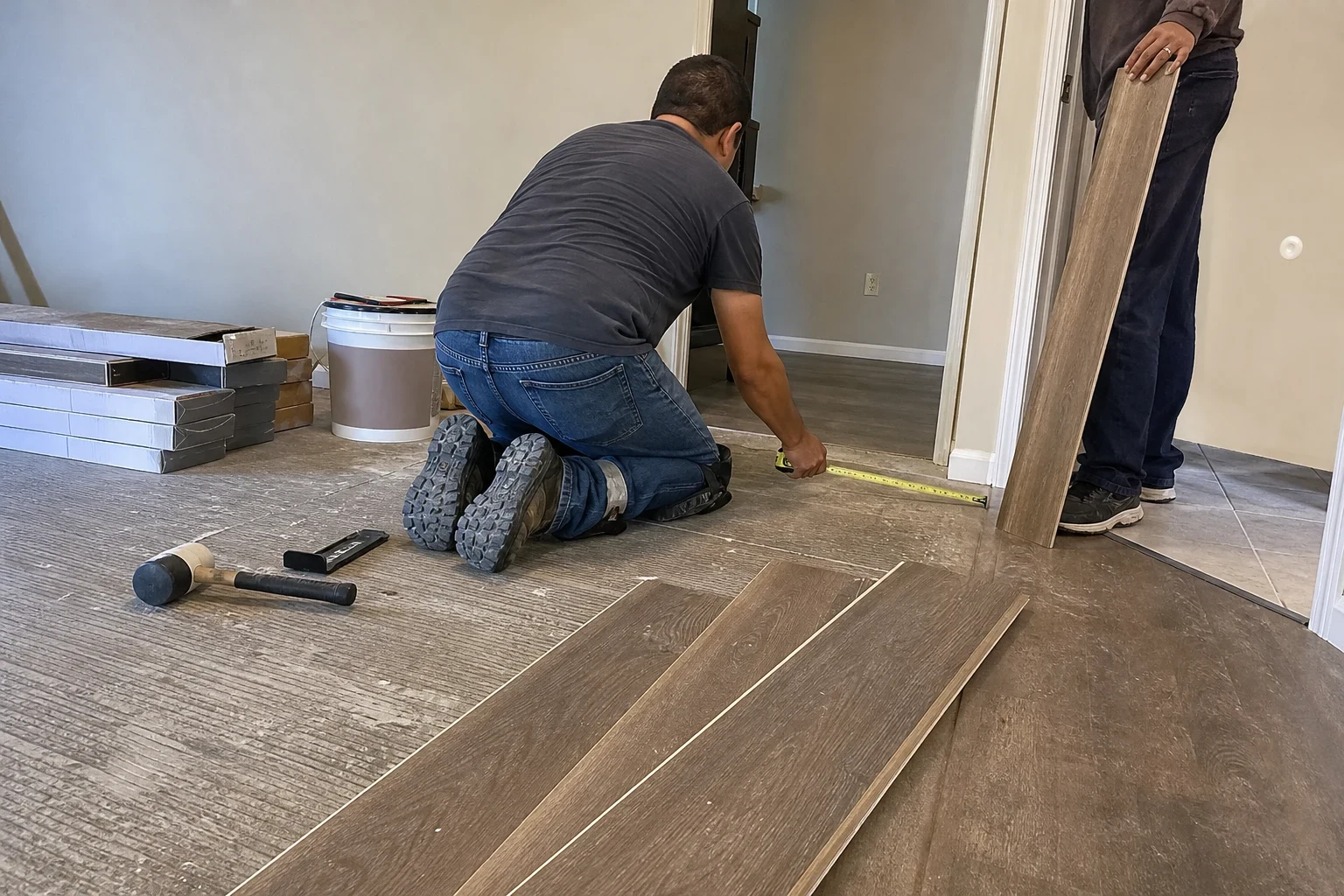
We pull up carpet, tile, vinyl or laminate and haul it off. Tile removal takes longer and makes more dust, so we seal off the work area first.
Subfloor prep
High spots get ground down and low spots get filled. Hardwood needs a flat base, and skipping this step is the most common reason floors squeak or hollow out later.
Acclimation
The wood sits in your home for several days before it goes down. That lets it adjust to your indoor air so it does not shrink or swell after install.
Installation
Engineered planks are glued down or floated over a slab. Solid boards are nailed to plywood. We cut door jambs so the floor slides under them cleanly.
Trim and transitions
We reset or replace baseboards and quarter round, and fit transitions where the hardwood meets tile or carpet. If the floor runs to your stairs, our stair flooring work can match it.
Signs It Is Time for New Hardwood
- Boards that cup or crown
- Edges rising above the center, or the center bulging up, usually point to moisture. If the boards are too far gone, replacing them over a properly prepped base is the fix.
- Wide gaps that never close
- Some seasonal gapping is normal. Gaps that stay open all year, or boards that have pulled loose, mean the floor has failed.
- Worn-through engineered wood
- Engineered hardwood has a top layer of real wood. Once that layer wears through to the plywood core, the plank is done.
- Carpet you are tired of cleaning
- Many people switch to hardwood to get rid of carpet that holds dust and pet hair. Wood takes a broom and a damp mop, nothing more.
- Soft or bouncy spots
- A floor that gives underfoot often has a subfloor problem. We find the cause before new wood goes over it.
From First Call to Finished Floor
- 1
First call and home visit
Start by telling us which rooms you want done and how much foot traffic they get. Then we stop by to measure, run a moisture test and check what sits under the floor you have now.
- 2
Line-item estimate
The estimate breaks out wood, prep, tear-out and trim as separate lines. Where a less expensive floor would do a room more good, we tell you.
- 3
Wood dropped off to acclimate
The boxes are left in your home for a few days. We stack them with space between so air reaches every side.
- 4
Install days
Walls and nearby floors get covered first. Then the old floor comes up, the base gets prepped and the wood goes down. You can usually walk on a finished room that evening, though furniture on a glue-down floor waits until the adhesive cures.
- 5
Final walk and cleanup
Scraps leave with us and the floor gets vacuumed. We go over it together and share a few care habits that keep the finish looking good.
Where Hardwood Costs Come From
Two things set the number: the boards you choose and the condition of the floor beneath them. A plank with a thicker wear layer costs more now but can last years longer, which matters if you are staying. We lay both figures side by side so you can see what you pay today against what you get over the life of the floor.
- Solid or engineered
- Species, board width and the thickness of the wear layer all change the material cost. Wide-plank white oak costs more than narrow red oak.
- Removing the old floor
- Carpet and pad come up fast and light. Ceramic tile bonded in mortar has to be chipped out by hand, which means more hours and more debris to haul away.
- Subfloor condition
- A flat, dry slab keeps costs down. Grinding, leveling compound or a moisture barrier adds to the job.
- Layout and rooms
- Open rooms go faster than halls and closets with lots of cuts. Diagonal or herringbone patterns take more time and more waste.
- Trim and stairs
- New baseboards, transitions and any stair treads are priced as their own lines.
Hardwood Flooring Questions
- Can you put hardwood over a concrete slab?
- Yes, in most cases. We use engineered hardwood, glued down or floated, after testing the slab for moisture. Solid hardwood is a poor fit directly on concrete, so we steer you away from it there.
- Is engineered hardwood actually wood, or a picture of wood?
- It is actual wood. Each plank has a slice of hardwood bonded over several layers of plywood. That build handles humidity changes better than a solid board, and once it is down it looks and feels the same. A thicker hardwood slice gives you a longer-lasting plank.
- How long does installation take?
- Once the wood has acclimated, a typical living area takes two to four working days. Breaking out old tile or doing a lot of leveling stretches that out. Your estimate comes with a timeline so you can plan around the work.
- Will hardwood hold up to dogs?
- Harder species like hickory and wire-brushed or matte finishes hide claw marks well. Every wood floor will show some wear with pets. If you want something tougher for a busy room, we can compare it with laminate flooring or luxury vinyl plank.
- Do I need to move out during the job?
- No. We work room by room and seal off dust where we can. You will want to keep pets and kids out of the work area during install hours.
- How do I care for a new hardwood floor?
- Sweep or vacuum often and use a cleaner made for wood floors. Skip steam mops and wet mopping. Felt pads under chair legs and a mat at each door go a long way.
Ready to Price Out Hardwood?
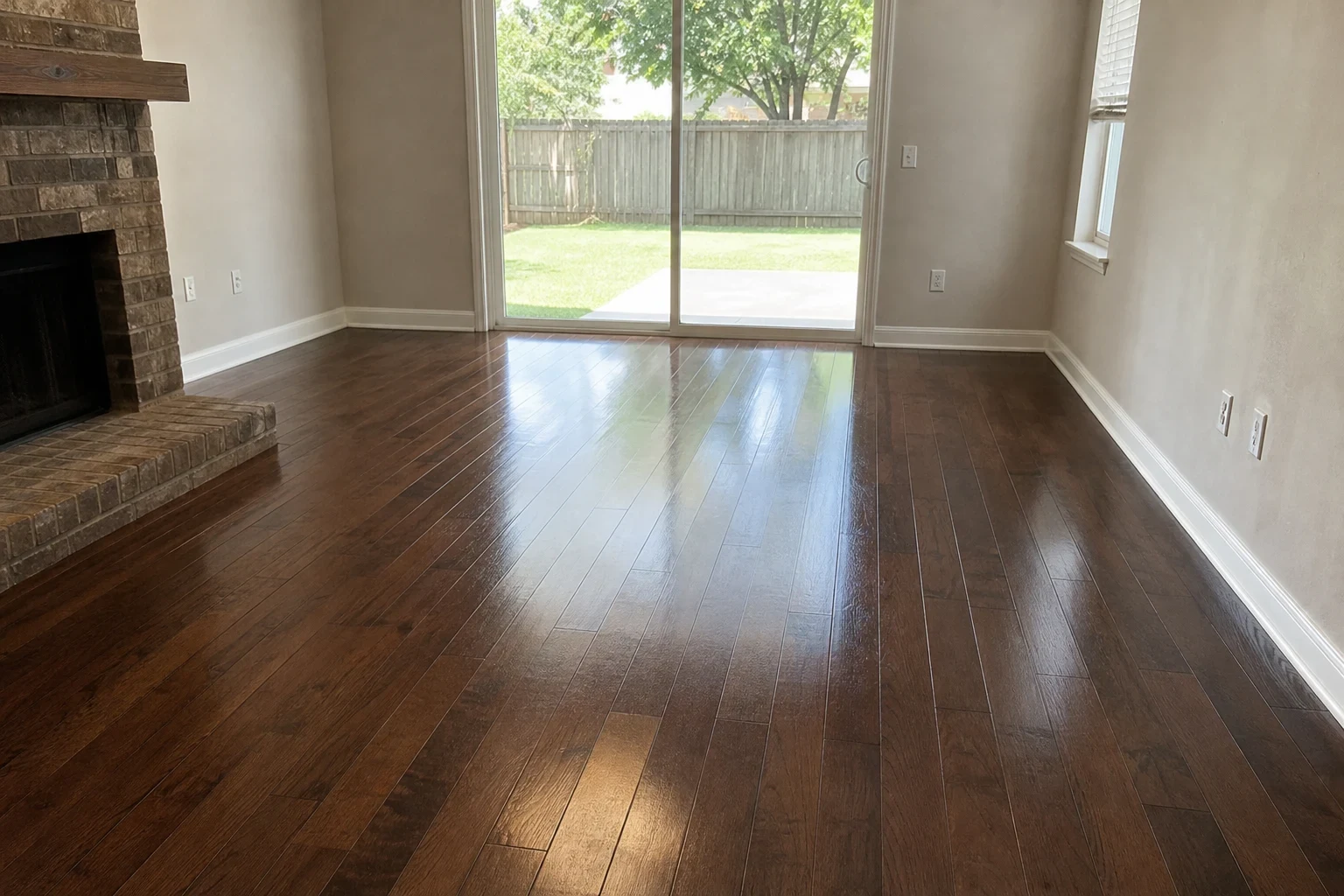
Give us a rough idea of the rooms and the flooring you have today. We will book a visit to measure, check the subfloor and hand you numbers you can compare side by side.