ServicesVinyl Composition Tile
Vinyl Composition Tile in Conroe
VCT is the tough, low-cost tile that holds up to boots, tools and rolling carts. We test your slab, level it, and lay each tile tight. Before you buy, we tell you what it costs to keep it looking good, so the cheap option stays a good deal.
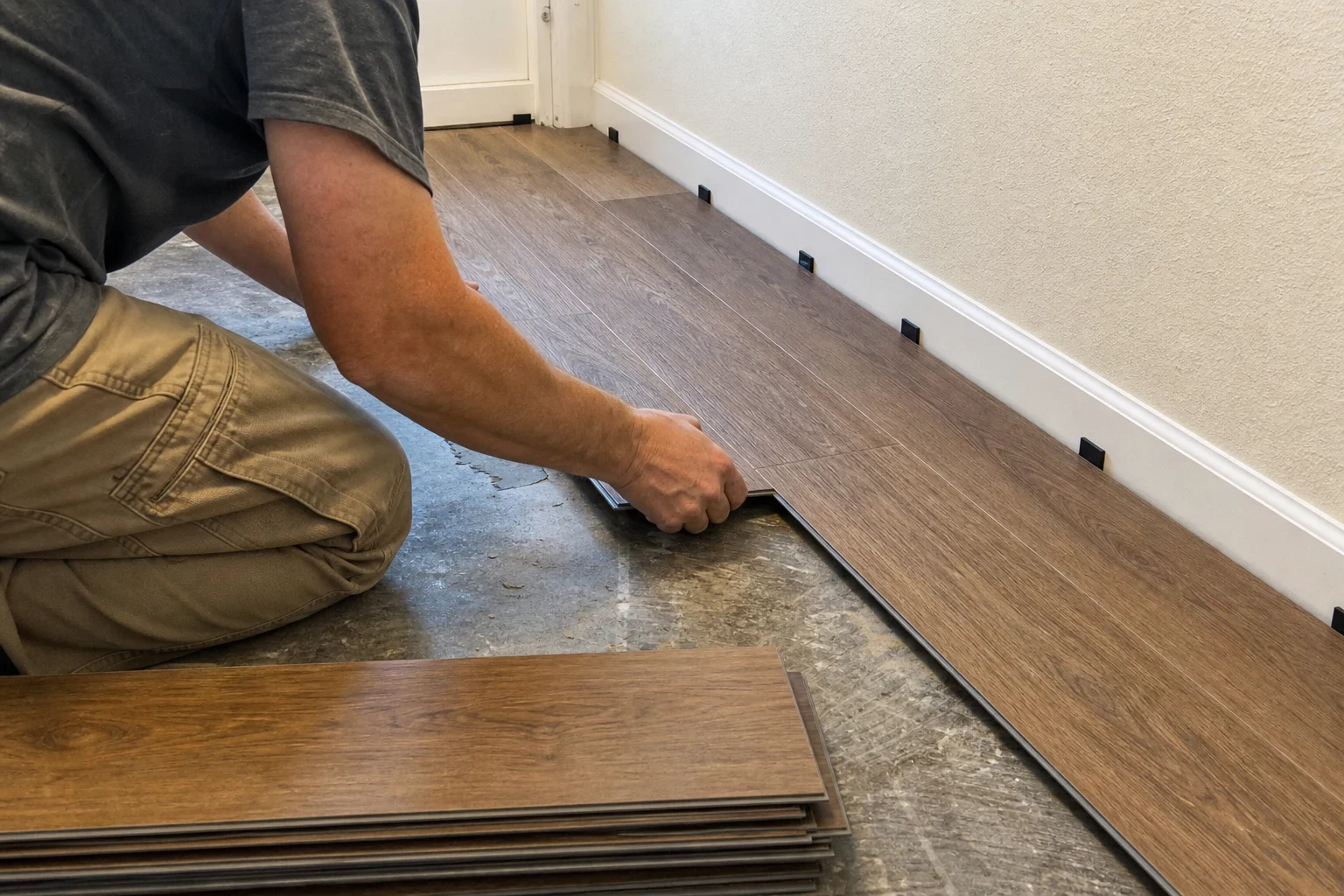
A tough, low-cost tile that asks for a little care
Vinyl composition tile, or VCT, is the 12-inch square tile you've walked on in schools and stores. It's mostly limestone filler bound with vinyl, glued down one tile at a time. It's cheap to buy and it takes a beating.
The trade-off is upkeep. The surface is slightly porous, so VCT needs coats of floor finish to keep it from dulling and staining. Those coats wear down and need redoing over the years. Luxury vinyl tile skips that step but costs more to put in. We lay out both sides plainly so you pick the one that makes sense for the room.
In homes we put it in garages, laundry rooms, workshops, mudrooms and playrooms. Some folks want it in a kitchen for a classic checkerboard look, and it does that well.
What we do on a VCT job
- Moisture test on the slab
- Most homes around Conroe sit on concrete slabs. We test for moisture before any glue goes down. A damp slab breaks down the adhesive and tiles start lifting at the edges.
- Floor prep and leveling
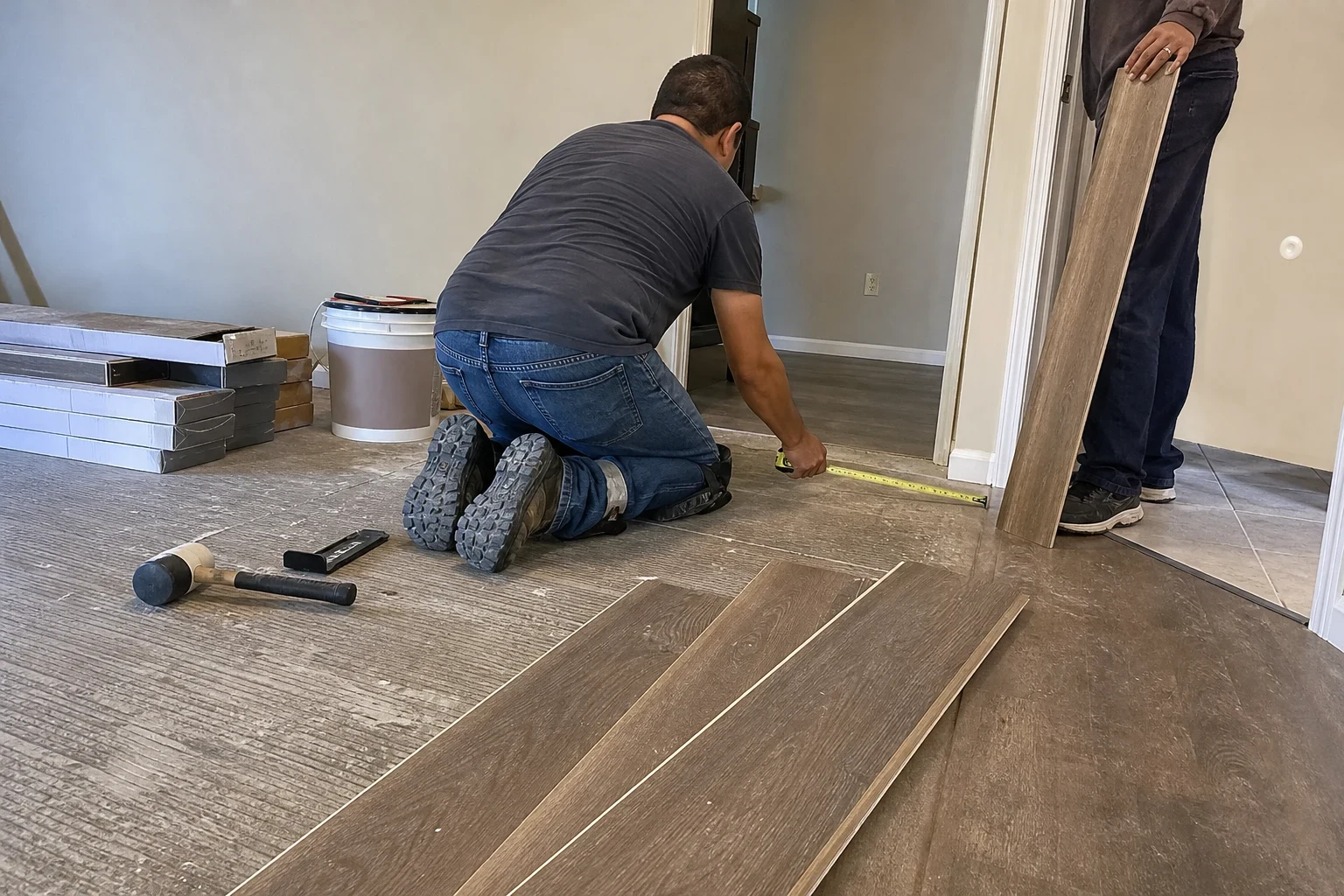
- The old flooring comes out first. Then we knock down humps with a grinder and patch low spots and cracks until the surface is flat. VCT is only about an eighth of an inch thick, so anything underneath telegraphs through. This part takes most of the time.
- Layout from the center
- We snap lines from the middle of the room and dry-lay the pattern first. That way the cut pieces at the walls come out even and you don't get thin slivers at a doorway. Checkerboards and borders get planned out on the floor before gluing.
- Glue, set and roll
- We spread adhesive with the right trowel, wait for it to tack up, then set the tiles tight. A heavy roller presses every tile into the glue so it bonds flat.
- Trim and transitions
- We add wall base, reducers at doorways and clean cuts around door jambs, water heaters and drains.
- Care walkthrough
- Before we leave, we tell you when you can mop, which cleaners to skip and when the floor will be due for fresh finish coats.
Signs VCT is the right call
Your garage floor is stained and dusty
Bare concrete soaks up oil and sheds dust. VCT gives you a surface you can sweep and mop.
Paint-on garage coating is peeling
Flaking coatings look worse every year. Tile glued to a prepped slab is a sturdier fix for a work area.
The room takes real abuse
Workshops, kids' rooms and mudrooms see dropped tools, toys and wet shoes. VCT shrugs that off and a single damaged tile can be swapped out.
Old tiles are cracking or popping loose
Older tile floors often fail because the glue gave out. If your old tiles are 9-inch squares, they may contain asbestos, and we'll recommend testing before anything is pulled up.
You want a retro pattern on a budget
Checkerboards and color borders are easy with VCT and cost far less than doing the same look in other materials.
What moves the price
VCT itself is one of the cheapest floors you can buy. Most of the cost is labor and prep, and the slab decides how much of that you need. We also count upkeep, because a floor that needs finish coats every so often costs more over the years than the tile price shows.
Size and shape of the room
Open rectangles go fast. Closets, angles and lots of cuts around fixtures add time.
Slab condition
Cracks, dips and old glue residue all need work before tile goes down. A high moisture reading can mean a moisture barrier too.
Removing the old floor
Tearing out carpet, sheet vinyl or old tile adds labor and disposal. Old tile that needs asbestos testing adds a step before removal.
Layout and color choices
One solid color goes down fastest. A checkerboard, a border or a mix of shades means more planning on the floor and more precise cuts.
Long-term upkeep
Plan on regular finish coats to keep VCT looking good. If you'd rather never think about it, luxury vinyl tile costs more now but less later.
From first call to finished floor
- 1
First call, then a look at the room
On the phone, describe the space and what goes on in it. Then we stop by to measure, check the slab and see what flooring is down now.
- 2
Your quote, line by line
We go over prep, removal, tile, trim and labor so you know what each part costs. We also give you an honest read on upkeep compared with luxury vinyl tile.
- 3
Prep day
Old flooring comes up, the slab gets ground and patched, and the tile sits in the room to adjust to the temperature.
- 4
Install day
We lay out the pattern, glue and set the tile, roll it and add trim. Then we clean up and haul off the scraps.
- 5
Before you move back in
Keep heavy traffic off for the first day while the glue cures. We tell you when furniture and vehicles can go back on.
VCT questions we hear
What's the difference between VCT and luxury vinyl tile?
VCT is mostly limestone filler and needs floor finish to stay shiny and stain resistant. Luxury vinyl tile has a printed design and a factory wear layer, so it needs no waxing. VCT costs less to install and is easier to patch one tile at a time. Luxury vinyl tile costs more but asks less of you every year after.
Does VCT really need waxing?
Yes, if you want it to look good. Without finish coats it dulls and picks up stains. How often depends on traffic. A laundry room needs it far less often than a busy mudroom.
Will VCT hold up in my garage?
It handles foot traffic, tools and rolling carts well. Hot tires are the catch. On a summer day, tires coming off the road can soften the surface and leave marks, so some folks put mats where the tires park. We'll talk through how you use the space.
Can you put VCT over my existing floor?
Usually not. VCT is thin and shows anything underneath, so it goes on a clean, flat slab or underlayment. Old tile or sheet vinyl almost always comes up first.
How long does VCT last?
With regular finish coats and normal care, it can last a long time. The tile itself rarely wears out. Failures usually come from moisture under the slab or poor prep, which is why we test and level before laying a single tile.
Pick the floor that costs less over the years
Tell us about the room and how hard you use it. We'll compare VCT with the other options straight, including what each one takes to keep up.