ServicesTile Flooring
Tile Flooring in Conroe
Tile costs more to put down than most floors. It also outlasts most of them by decades if the floor under it is flat and the tile is set right. We prep the floor, set porcelain or ceramic tile, and tell you what upkeep to expect.
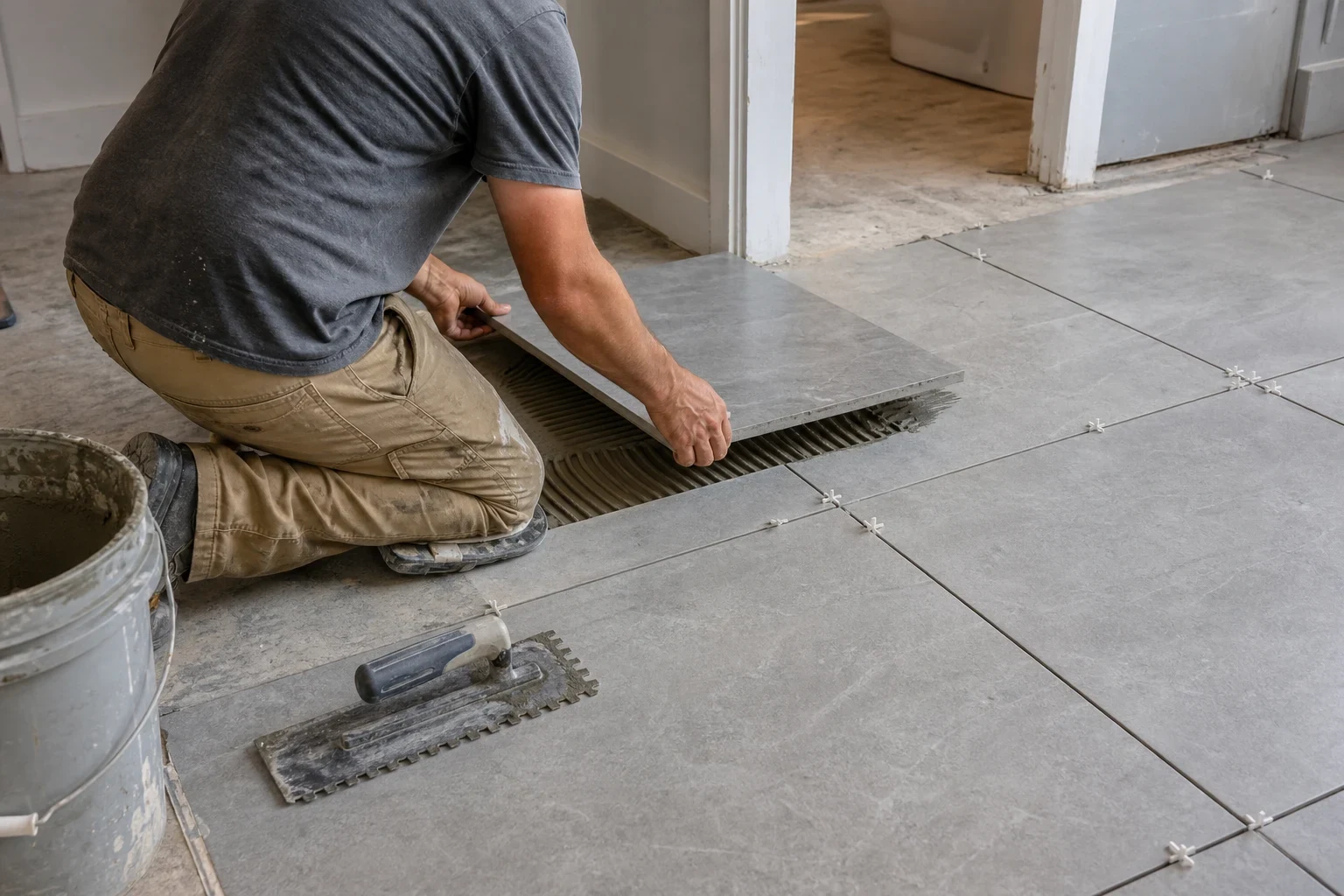
A Floor You Pay For Once
Tile is the floor you pay more for on day one and less for every year after. Porcelain and ceramic don't scratch from dog nails, don't swell when the dishwasher leaks, and don't wear a path down the hallway. The catch is the install. Tile is only as good as what sits under it and how well the mortar grips it.
Most homes in and around Conroe sit on concrete slabs, which suits tile well, as long as the slab is flat and any cracks are dealt with before we set a single piece. We check both before we give you a number.
If you're weighing tile against luxury vinyl plank or laminate, we'll tell you plainly where each one makes sense. Tile earns its cost in kitchens, baths, laundry rooms and entries. It's harder and cooler underfoot, and that matters to some people more than lifespan does.
What a Tile Job Includes
Removing the old floor
We pull up carpet, vinyl, laminate or old tile and haul it off. Breaking out old tile kicks up a lot of grit, so we hang plastic across the openings and tape over the air returns first.
Getting the floor flat
We grind down high spots and pour self-leveler in low ones. Large tiles need a flatter floor than small ones, or the edges sit uneven and catch your toes.
Crack isolation membrane
Where a slab has cracks, we lay a membrane over them before tiling. It lets the concrete move a little without that movement cracking the tile above it.
Layout and setting
Before any mortar is mixed, we lay tile out loose across the room. That lets us push the skinny trimmed pieces under the baseboards and away from doorways, where you'd notice them every day. Larger tiles get mortar on the back and the floor, and we pull a tile now and then to check coverage.
Grout and movement joints
We leave gaps at the walls and fill long runs with flexible joints so the floor can expand in summer heat. Then we grout with the type you picked.
Trim and cleanup
Baseboards go back, transitions go in at doorways, and we clean the haze off the tile before we leave.
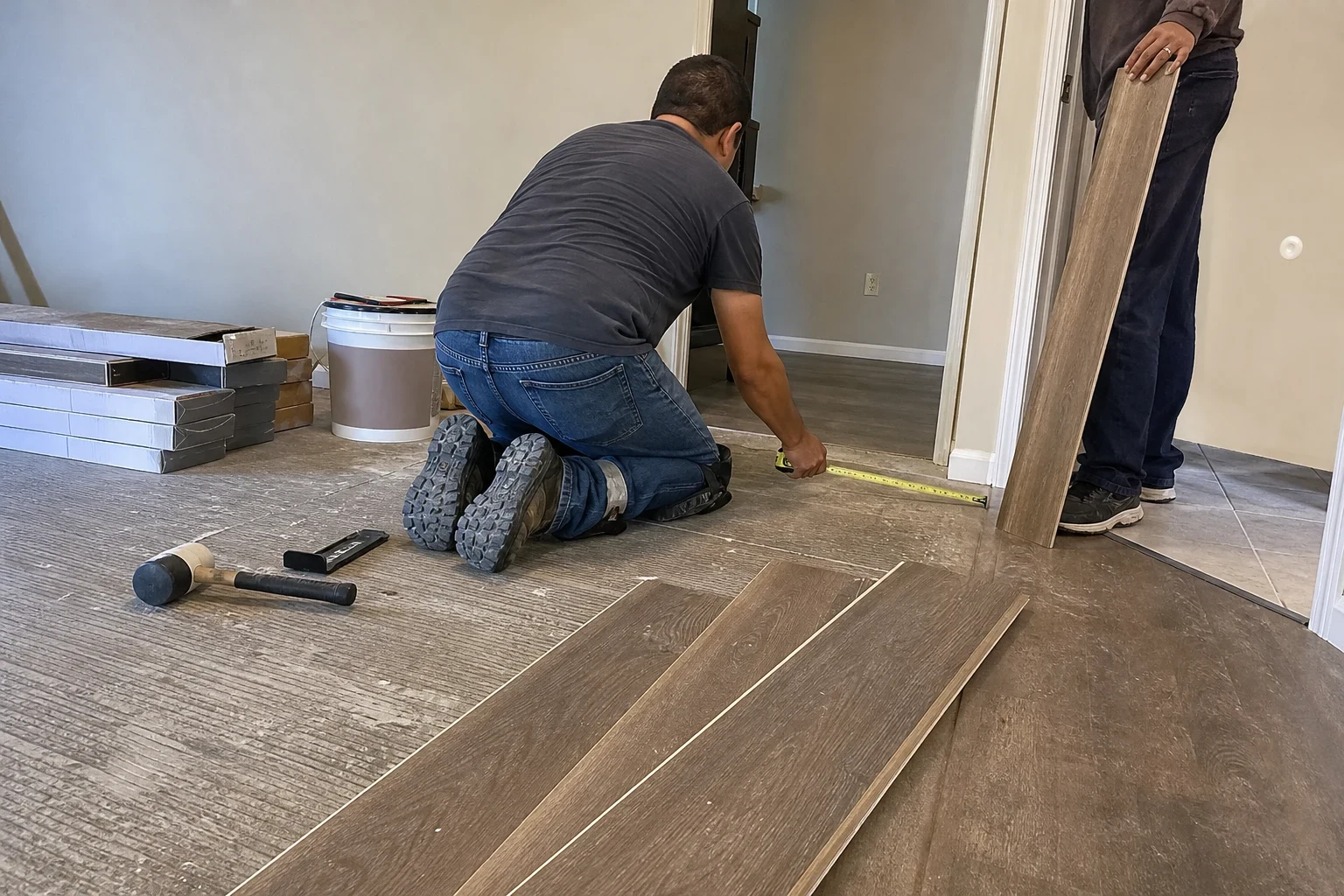
Signs It's Time for New Tile
- Cracked tiles in a line
- A crack running across several tiles usually means the slab moved or the tile was set without a membrane. Replacing a few won't stop it coming back.
- Hollow spots when you tap
- Tap a tile with a coin. A hollow sound means the mortar under it has let go in spots, and those tiles tend to crack under weight.
- Grout that crumbles or stays dark
- Grout that's breaking out or won't come clean has usually let water in. Once it goes, the tile around it follows.
- Wet rooms with the wrong floor
- Laminate swelling by the tub or vinyl lifting at the laundry room door is a sign that room needs something water won't hurt.
- You plan to stay a long time
- If you'll be in your home for many years, tile's up-front cost spreads thin. That's when it pays off best.
How the Work Goes
- 1
Walkthrough and measuring
We come out, measure each room and check the slab or subfloor for cracks, dips and moisture. You'll know what prep the floor needs before you pick a tile.
- 2
Picking tile and grout
We walk you through porcelain versus ceramic, tile size and grout type, and what each costs now and over the years. Then you get your quote by phone, line by line.
- 3
Demo and prep day
Old flooring comes out, the floor gets ground and leveled, and membrane goes down where it's needed. On bigger jobs, leveler may need a day to cure.
- 4
Setting and grouting
We set the tile and keep everyone off it for about a day. Grout goes in after that, and light foot traffic is usually fine a day later.
- 5
Final look together
We walk the floor with you, point out the movement joints and explain how to care for your grout. Heavy furniture can usually come back in about three days.
Where Your Tile Money Goes
Most of a tile bill is labor and prep, which is why it runs higher than vinyl or carpet. In return you get a floor that can stay put as long as you own your home. Here's what pushes your number up or down.
- Room size and shape
- More square feet means more tile and more labor. Lots of corners, closets and doorways add cuts and time.
- Tile size and type
- Large-format porcelain looks clean but needs a very flat floor and two people to set. Small mosaics take more grout and more hours.
- What's coming out
- Pulling up carpet is quick. Breaking out old tile and scraping thinset off the slab takes much longer.
- Condition of the floor underneath
- Cracks, dips and high spots all need fixing before tile goes down. A flat, sound slab keeps prep costs low.
- Pattern and grout
- Herringbone and diagonal layouts mean more cuts and more waste. Upgraded grout costs more now but saves sealing every year or two.
Tile Flooring Questions
- Should I pick porcelain or ceramic?
- Porcelain is denser and soaks up less water, so it holds up better in baths, entries and busy kitchens. Ceramic costs less and works fine in rooms with lighter use. If you're unsure, porcelain is the safer bet for the long run.
- Will my tile crack if the slab shifts?
- Slabs on clay soil do move some. We treat existing cracks with a membrane and leave movement joints so the tile has room to flex. That doesn't make a floor crack-proof, but it heads off most of the cracking we see on older jobs.
- Do I have to seal the grout?
- Standard cement grout should be sealed after it cures and resealed every year or two. Urethane and epoxy grouts cost more up front but don't need sealing and resist stains much better. We'll lay out both so you can decide what upkeep you want.
- Can you tile over my old floor?
- Sometimes. New tile over old tile can work if the old tile is solid, still firmly stuck down, and the added height clears your doors and appliances. Over vinyl, laminate or carpet, the old floor has to come out first.
- How long does a tile floor last?
- A well-set porcelain floor can last for decades. Grout is usually what wears first, and it can be cleaned, resealed or replaced without tearing out the tile.
- How long will my kitchen be out of use?
- For a typical kitchen, plan on a few days from tear-out to grout, plus about a day before you walk on it normally. We'll give you a day-by-day plan before we start.
Thinking About Tile for Your Kitchen or Bath
Tell us which rooms you have in mind and what's on the floor now. We'll talk through tile against your other options and what each will cost you over the years.