ServicesStair Flooring
Stair Flooring in Conroe
Your stairs take more foot traffic per square foot than any other floor in your home. We replace worn carpet, loose nosing and tired treads with stair flooring picked for how long it lasts and how easy it is to keep up, not just what it costs today.
What Stair Flooring Covers
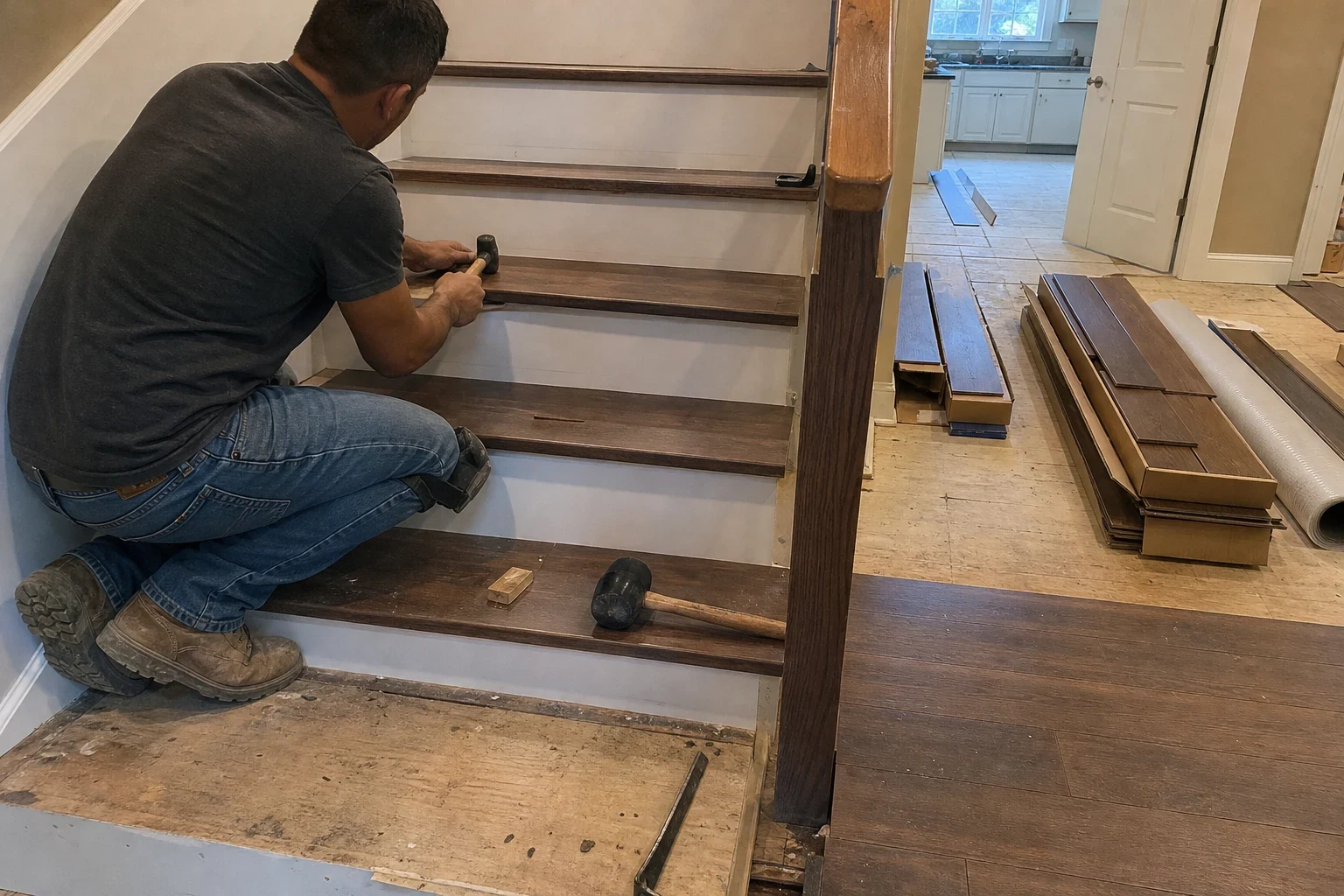
Stair flooring is the treads you step on, the risers in front of them and the nosing on each front edge. We cover them in hardwood, luxury vinyl plank, laminate or carpet, usually to match a new floor upstairs or down.
Stairs are where cheap choices show first. Every step lands on the same spot of the nosing, so a thin edge or a glued-on cap can wear through or pop loose years before the flat floor around it. We walk you through which options cost more now and which ones you will be fixing again sooner, so you can pick with the full picture.
What the Work Includes
- Tear-out of the old covering
- Old carpet comes up along with the pad, the tack strip and every last staple. Worn caps and treads come off too. Then we see what the steps are really made of before anything new goes on.
- Step-by-step measuring
- No two steps in a staircase are exactly the same size. We measure and cut each tread and riser on its own so the joints stay tight and the gaps stay small.
- Nosing that fits the material
- Hardwood gets a solid bullnose or a full retrofit tread. Vinyl plank and laminate get a matching stair nose made for that product, fastened as well as glued. The nosing is the part that takes the beating, so we do not cut corners on it.
- Riser height check
- Adding thickness to the treads can make the top or bottom step taller than the rest. We check this before we start and plan the build-up so the steps stay even and comfortable to walk.
- Fit at the walls, skirt and landing
- We scribe pieces around skirt boards, balusters and open sides, and carry the material across landings so the transition to the floor reads clean.
Signs Your Stairs Are Due
Carpet worn flat on the edges
Stair carpet wears at the nose first. Once the backing shows or the pile is crushed shiny, cleaning will not bring it back.
Loose or cracked nosing
When the nose moves under your foot, somebody is going to trip on it. Most of the time the adhesive gave out, or the piece was only glued and never nailed or screwed.
Squeaks on every step
Squeaks often come from loose treads rubbing on the stringers. We can often fasten these down while the covering is off.
Stairs that no longer match
You put new floors in downstairs and the stairs still have old carpet. Matching them ties the rooms together and is easier to do now than later.
Pet or kid wear you can't keep clean
Stained carpet on stairs is hard to get out. A hard surface wipes down in a minute.
How We Price a Staircase
We count steps instead of square footage, since cutting and fitting each one is where the hours go. The material matters, and so does the layout of the staircase. Your estimate lists each part of the job on its own line, so you can see what every piece costs and how many years of wear each choice should give you.
Number and shape of steps
A straight run is the simplest. Winders, curved steps and landings take more cutting and more material.
Material and nosing type
Solid hardwood treads cost more up front than vinyl or laminate with a stair nose, and carpet costs less still. Hardwood and well-fastened vinyl tend to outlast carpet on a busy staircase, so the gap narrows over time.
Open sides and skirt boards
An open side needs a return on each tread end. Tight skirt boards need careful scribing.
What is under the old covering
Particleboard or damaged treads may need to be replaced before anything goes on top. We show you what we find before doing extra work.
How a Stair Job Goes
- 1
Talk it through on the phone
You tell us about the stairs, how many steps, what is on them now and what floor sits at the top and bottom. We give you an idea of options and set a time to look.
- 2
Look and measure
We check the treads underneath, the riser heights and any open sides or landings. Then we write up an estimate with tear-out, repairs, treads, risers and nosing each broken out on its own.
- 3
Tear-out and prep
We protect the floor at the base, take off the old covering and fix loose treads. Most stairs in this area sit on wood framing even in slab homes, so this is where squeaks get handled.
- 4
Install, top to bottom
We set risers and treads one step at a time and glue and fasten each nosing. You will have limited use of the stairs on install day, and we tell you ahead of time when they are clear.
- 5
Clean up and walk it
We haul off the old material, vacuum the dust and walk the stairs with you before we leave.
Stair Flooring Questions
Can you match my stairs to the new floor in the rest of the house?
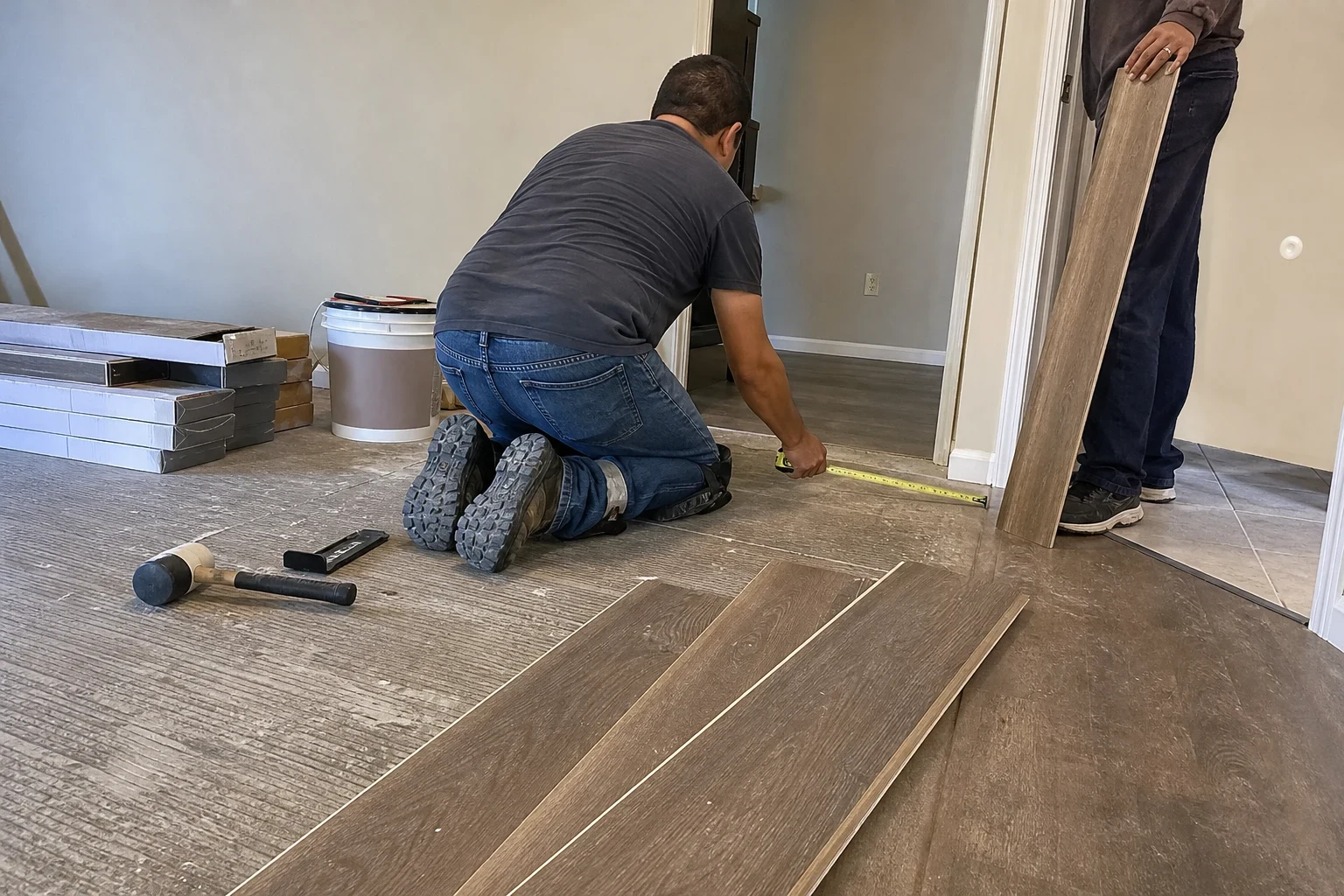
Yes, in most cases. Many vinyl plank and laminate lines have a matching stair nose, and we can pair hardwood treads with a hardwood floor. If an exact match is not made, we help you pick a tread that sets off the floor instead of fighting it.
Can hardwood treads go over stairs that had carpet?
Usually. Carpeted stairs often have rough treads with an overhang, so we cut the nose back and install retrofit treads and risers over them. We check riser heights first so the top and bottom steps do not end up taller than the rest.
Is carpet or a hard surface better on stairs?
Carpet is softer, quieter and costs less up front. A hard surface lasts longer on a busy staircase and is easier to keep clean with pets. If you want both, a runner over hardwood is an option we can talk through.
How long will we be without our stairs?
A typical straight staircase takes a day or two depending on the material. Glued pieces need time to set, so we plan the job to give you a path up and down when we can and tell you ahead of time when you can't.
Do you take the old carpet with you?
Yes. Tear-out and haul-off of the old carpet, pad and tack strip are part of the job, and we vacuum before we leave.
Ready to Fix Those Stairs
Give us a rough count of your stairs and tell us what covers them today. We will weigh each material against your budget and how long it should last, then set a time to measure.