ServicesLuxury Vinyl Tile
Luxury Vinyl Tile in Conroe
Luxury vinyl tile gives you the look of stone or ceramic in a floor that is warmer, quieter and easier on your knees. We help you pick the right wear layer and install method so the floor you pay for once keeps looking right for years.
Where luxury vinyl tile fits in your home
LVT is a vinyl floor cut into squares and rectangles rather than long boards. Its printed layer copies slate, marble, travertine or ceramic. On top sits a clear coat, called the wear layer, that takes the scuffs. A few styles are built to be grouted like the real thing.
We put it down most often in bathrooms, kitchens, laundry rooms and the door in from the garage. Those spots get water and grit, and LVT shrugs off both. It looks like tile underfoot, but it is softer than ceramic and will not crack if you drop a heavy pan. There is no sealing to keep up with. On the slab foundations common around Conroe, it also goes down without the weight and mortar of real tile.
We will tell you plainly when it is not the best fit. If you want wood grain, our Luxury Vinyl Plank page is the closer match. If you want something that lasts decades with almost no wear, Tile Flooring may cost more now and less over time.
What the job includes
- Old floor removal
- We pull up the existing carpet, sheet vinyl, laminate or ceramic and haul it off. Ceramic takes longer because the mortar has to come up with it.
- Slab moisture check
- We test the concrete before anything goes down. Moisture coming up through a slab is the most common reason vinyl floors lift or smell musty later.
- Leveling and patching
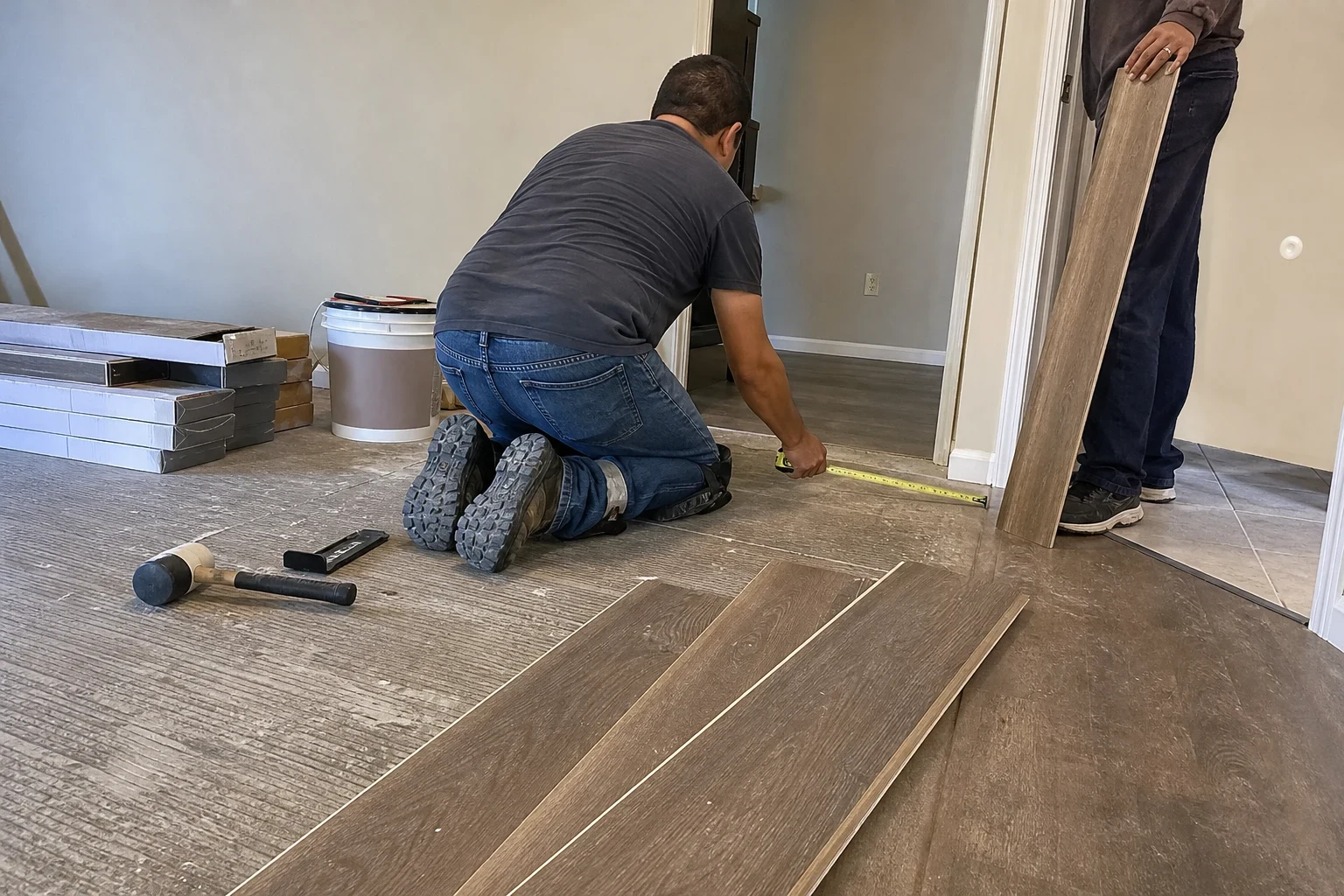
- Floating LVT needs a flat floor, usually within about 3/16 of an inch over 10 feet. We grind high spots and fill low ones so seams do not pop or click underfoot.
- Layout and install
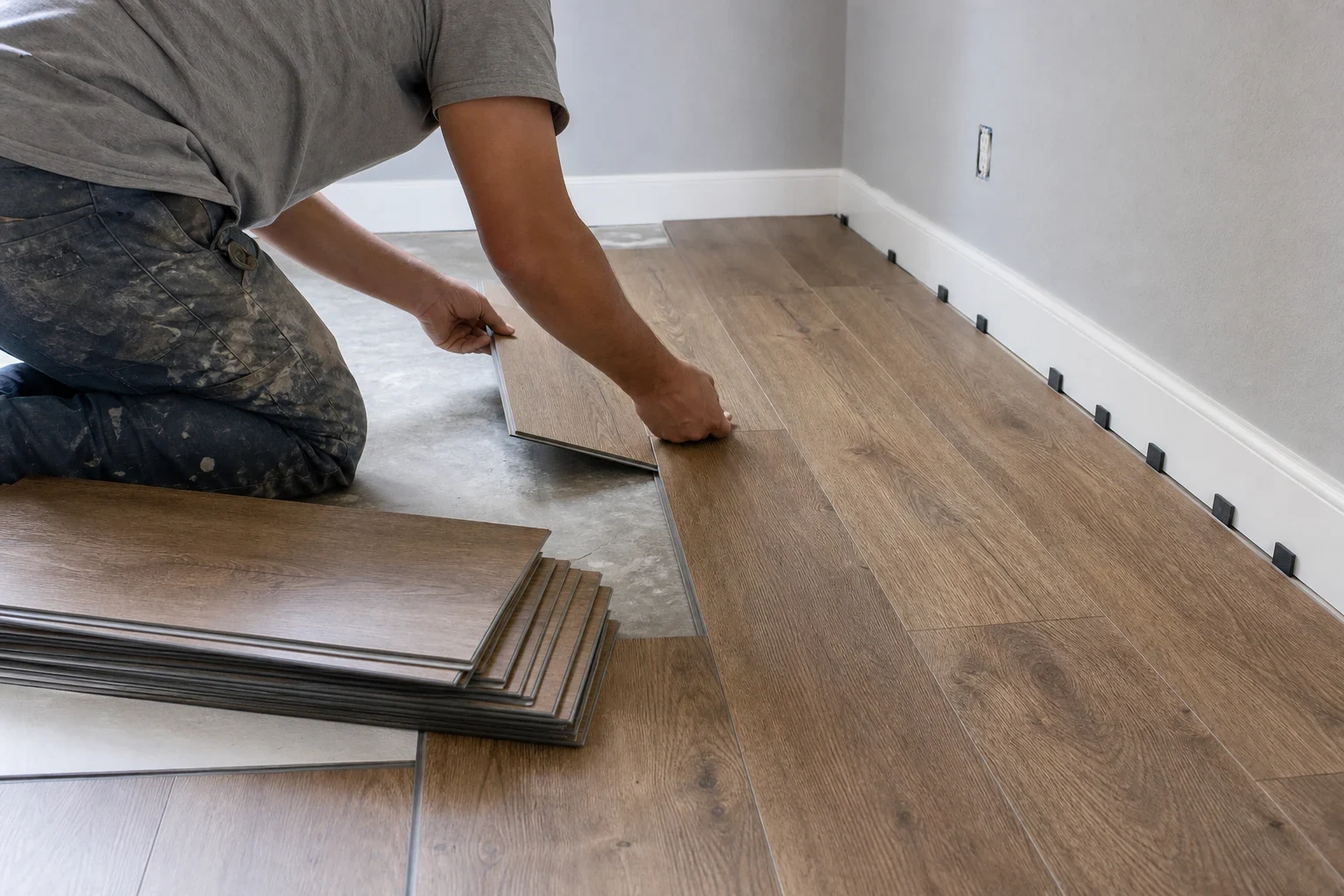
- We plan the tile layout from the center of the room so cuts at the walls stay even. Depending on the product, tiles are glued down or clicked together as a floating floor, with grout where the style calls for it.
- Trim and transitions
- We set baseboard or quarter round and fit transition strips where the LVT meets carpet, wood or another floor. Doorways close without dragging.
- Cleanup
- We vacuum, wipe down the floor and put back the furniture we moved. You can walk on it the same day.
Signs it is time for luxury vinyl tile
Cracked ceramic or crumbling grout
Broken tiles and dark, crumbling grout lines let water under the floor. LVT replaces them with a surface that has no grout to scrub, or grout that is flexible.
Sheet vinyl that is peeling
Old sheet vinyl curls at seams and edges, and dirt packs under it. Once it lifts, gluing it back rarely holds.
Carpet in a wet room
Carpet in a bathroom or by the back door holds moisture and stains. A water-resistant floor makes more sense there.
Tile that is cold and loud
If you dread the bathroom floor on a winter morning, vinyl is noticeably warmer and softer to stand on.
You want stone without the upkeep
Natural stone needs sealing and can etch. LVT gets the look with a damp mop.
How the work goes
- 1
Phone call and walkthrough
You tell us about the rooms and how they get used. We come out, measure, check the subfloor and show you samples in your own light.
- 2
Picking the product
We lay out the trade-offs side by side: thicker wear layers cost more up front but hold up longer under dogs, kids and kitchen chairs. You pick what fits your budget and how long you plan to stay.
- 3
Prep day
We move furniture, remove the old floor, test and level the slab. Most rooms are ready for tile by the end of prep.
- 4
Install and finish
We set the tile, grout if needed, then trim and transitions. We walk the floor with you before we leave and go over basic care.
What moves the price
We price every job after we have seen the floor, because what is underneath changes the work more than anything. You get a written estimate with each part broken out. Then we talk about what each choice costs over the life of the floor, not just today.
- Square footage and layout
- More area means more material and labor. Small rooms with lots of corners, cabinets and toilets take more cuts per foot.
- Wear layer and core
- A 20 mil wear layer costs more than a 12 mil one but wears much slower in busy rooms. Rigid core tiles cost more and hide minor floor flaws better.
- What comes up first
- Removing carpet is quick. Removing glued sheet vinyl or ceramic tile with mortar is real labor and adds time.
- Subfloor condition
- A flat, dry slab needs little. Cracks, dips or high moisture mean patching, leveling or a moisture barrier.
- Grout and trim
- Groutable tile adds a step. New baseboards, quarter round and transition strips add material and time.
Questions about luxury vinyl tile
Something not covered here? (346) 654-3574
What is the difference between luxury vinyl tile and luxury vinyl plank?
Mostly the shape and the look. Tile comes in squares and rectangles printed like stone or ceramic. Plank comes in long boards printed like wood. The materials and install methods are close to the same.
Can luxury vinyl tile go in a bathroom?
Yes. Most LVT is waterproof on the surface, so spills and splashes are fine. Standing water that gets under the edges is still a problem, so we seal around tubs and toilets with care. It is one of the most common rooms we do.
Should I grout it?
Grout makes it look more like real tile, and the grout used is flexible so it does not crack like cement grout. It does add a step and cost. Ungrouted tile with tight seams is easier to clean. We show you both so you can decide.
Can you install it over my existing tile?
Sometimes. If the old tile is flat, solid and stuck down tight with no hollow spots, a rigid core LVT can float over it after we fill the grout lines. If tiles are loose or cracked, they need to come up first. We check before we recommend either one.
How long will it last?
It depends mostly on the wear layer and how the room is used. A thicker wear layer in a kitchen will look good far longer than a thin one. Felt pads under chair legs and a mat at the door add years too.
How long does the install take?
A single bathroom is often done in a day. A kitchen and connected rooms may take two or three days, more if the slab needs leveling or old ceramic has to come out. We give you the schedule before we start.
Let's pick the right tile for the room
Tell us about the room and how it gets used. We will come measure, check the floor underneath and walk you through which LVT will hold up best for what you spend.